
Selecting steel lockers for schools and universities presents a unique challenge: balancing tight budgets with the need for extreme durability, security, and functionality. An "affordable" locker isn't just the one with the lowest price tag; it's the solution that offers the lowest total cost of ownership over 10 or 15 years of constant, demanding use. This guide breaks down how to identify truly cost-effective metal lockers that will withstand the test of time in hallways, gyms, and dormitories.
Rethinking Affordable: Total Cost of Ownership (TCO)
The biggest mistake institutions make is prioritizing the lowest purchase price. A true assessment of affordability must include:
- Initial Purchase Price: The invoice cost of the lockers and hardware.
- Installation & Delivery: Costs for shipping, assembly, and anchoring.
- Maintenance & Repairs: Expenses for fixing broken doors, hinges, locks, and handles over the lifetime of the product.
- Replacement Costs: The frequency and cost of having to replace entire units that fail prematurely.
- Operational Efficiency: Costs associated with poor security (theft), lost time due to malfunctioning locks, or inefficient use of space.
A locker with a 20% higher initial cost but a 50% longer lifespan and 75% lower repair rate is almost always the more affordable choice. The goal is to find the sweet spot on the value curve—where increased quality delivers maximum longevity for a reasonable upfront investment.
Key Specifications for Durable, Budget-Conscious Lockers
Cutting costs should never mean cutting corners on critical components. Here’s where to focus your specifications:
1. Intelligent Material and Construction Choices
- Steel Gauge: For most school applications, 18-gauge steel bodies with 16-gauge steel doors provide an excellent balance of durability and cost. Avoid anything thinner than 20-gauge for any structural part.
- Finish: A quality powder-coated finish is non-negotiable. It should be applied over a phosphated surface for rust prevention. A good, standard-grade powder coat will far outlast cheap paint.
- Design Features: Look for sloping tops (which deter clutter and are easier to clean), reinforced door edges, and continuous piano hinges. These features prevent damage and reduce maintenance.
2. Locking Mechanisms: Balancing Cost and Control
Security is paramount, but systems vary widely in price and management overhead.
| Lock Type | Approx. Cost per Locker | Best For | Key Considerations for Affordability |
|---|---|---|---|
| Built-in Combination | Low-Medium | High schools, universities (assigned lockers) | Student-provided; eliminates key management cost. Specify key-controlled reset for staff. |
| Integrated Key Lock | Medium | Faculty, staff, equipment storage | Requires a formal key management system. Cost includes key duplication and replacement. |
| Padlock-Compatible Hasps | Very Low | Elementary/Middle schools, gyms (day-use) | Lowest upfront cost. Use with school-provided rekeyable padlocks for control. |
| Keyless Electronic | High | High-security areas, modern dorms | Highest upfront cost, but can reduce rekeying costs and offer audit trails. |
Pro-Tip for Large Deployments: For hallways with hundreds of lockers, a master-keyed combination lock system allows staff emergency access without distributing thousands of keys.
3. Choosing the Right Style for the Application
Using more expensive, full-featured lockers only where needed is a key budgeting strategy.
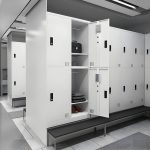
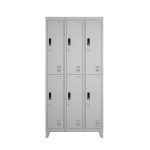
- Hallway Lockers (General Student Use): Standard single-tier or two-tier lockers are the workhorses. Two-tier models effectively double storage in the same floor space, offering a better cost-per-student ratio.

- Athletic & Locker Rooms: Here, ventilation is critical. Choose economical ventilated lockers featuring doors with ventilation holes. For team rooms where security requirements are not stringent, consider using sports lockers or doorless lockers to achieve significant cost savings.

- Dormitories & Campus Housing: Multi-compartment "Z-lockers" allow several students to share a unit's footprint, maximizing limited space efficiently. Durable, wood grain transfer lockers can offer a more residential feel at a competitive price.

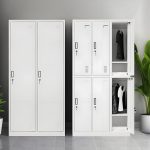
- Faculty & Departmental Storage: Simple, lockable storage cabinets or heavy-duty utility lockers often suffice, avoiding the need for more expensive student-grade units.
Strategic Sourcing and Procurement Tips
- Buy in Volume and Standardize: The single most effective way to reduce cost is to standardize a model across campus and purchase in large quantities. This gives you bulk pricing power and simplifies future maintenance and parts replacement.
- Consider Modular and Knock-Down (KD) Units: Lockers that are shipped flat and assembled on-site can drastically reduce shipping costs. Ensure the design is still robust once assembled.
- Plan for Phased Implementation: If budget is extremely tight, develop a 3-5 year replacement plan. Start with the highest-need or most deteriorated areas first. This shows progress and allows for budgetary planning.
- Request Detailed Bids, Not Just Catalogs: When soliciting quotes, provide your exact specifications (gauge, finish, lock type). Ask bidders to break out costs for hardware, delivery, and installation separately.
- Ask About Educational Discounts and Packages: Many manufacturers offer institutional pricing, package deals on locker/bench combos, or discounts on pre-configured models.
Installation and Maintenance: Protecting Your Investment
- Professional Installation: Ensure lockers are leveled and securely anchored, especially multi-bay configurations. Poor installation leads to binding doors, alignment issues, and premature failure.
- Establish a Simple Maintenance Protocol: Train custodial staff on proper cleaning (mild detergent, no abrasives). Designate a staff member to log and address minor repairs (loose handles, sticking locks) immediately before they become major issues.
- Buy Spare Parts: With your initial order, purchase extra handles, latch mechanisms, and lock cores. This ensures quick, inexpensive repairs for years to come.
Affordable metal lockers for education are not about finding the cheapest product on the market. They are about making strategic, informed decisions that prioritize durability and low lifetime cost. By specifying the right materials for the application, choosing cost-effective locking systems, sourcing intelligently, and protecting your investment through proper installation and maintenance, you can provide secure, functional storage for generations of students without straining the institution's budget. The most economical locker is the one you only have to buy once.