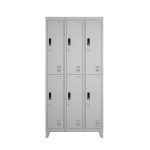

If you are an international buyer, procurement manager, or business owner seeking to import commercial storage cabinets, understanding their actual cost structure is crucial for effective negotiation and avoiding unexpected expenses. As a specialist steel furniture import-export company, I can assure you that the price tag is merely the starting point. Let us break down exactly what you are paying for when sourcing from manufacturers in other countries.
1. Core Product Cost: It’s Not Just "Per Unit"
This is the base price quoted by the factory, but it varies dramatically based on:
- Material & Gauge: Heavy-gauge cold-rolled steel costs more than thinner, galvanized sheets. Stainless steel commands a significant premium.
- Locking Mechanism: A simple padlock hasp is worlds apart from an integrated digital lock or RFID system.
- Finish: Standard spray paint is cheap; electrostatic powder coating (more durable, better finish) adds cost. Special anti-corrosion or chemical-resistant coatings add more.
- Size & Configuration: A full-height, double-tier locker costs more than a single compartment unit. Custom dimensions or non-standard designs increase tooling and production time.
- Order Quantity (MOQ): This is your biggest leverage. Unit prices drop significantly as you move from a sample order (e.g., 10 units) to a container load (e.g., 100+ units).
Sourcing Tip: Always request a detailed specification sheet with the quote. Compare "apples to apples" between suppliers.
2. Tooling & Setup Charges (NRE - Non-Recurring Engineering)
For custom designs—your company logo embossed on the door, a unique color match, or a specific shelf configuration—factories charge a one-time tooling fee. This covers the cost of modifying or creating new molds, cutting templates, and programming machines. This fee is typically paid upfront and is not included in the per-unit price.
3. Packaging & Palletization Costs
Proper export packaging is non-negotiable. This cost includes:
- Individual Packaging: Plastic film, corner protectors, and cardboard wrap to prevent scratches.
- Master Cartons/Wooden Crates: For larger assemblies.
- Palletization & Securing: Goods are stacked and strapped to standard wooden pallets for safe container loading.
Warning: Flimsy packaging leads to transit damage—a costly headache. Never skip on this.
4. Domestic Logistics & Port Charges (EXW vs. FOB)
This is a critical distinction in your Incoterms:
- EXW (Ex-Works): You pay only the product cost at the factory gate. You are responsible for all costs from there: trucking to the Chinese port, port handling fees, customs declaration, and loading onto the vessel. This gives you control but requires local coordination.
- FOB (Free On Board): The factory's quoted price includes delivery and all charges to get the goods loaded onto your chosen ship at the port of export. This is simpler for the buyer and is the most common term. The FOB cost is what you should use for easier comparison between suppliers.
5. International Freight (Ocean/Air)
This is often the most volatile cost:
- Ocean Freight: Calculated per container (e.g., 20' or 40' HQ). Prices fluctuate with fuel costs, seasonality (pre-holiday surges), and global demand. Lockers are ideal for container shipment (FCL) if your quantity is large enough.
- Air Freight: Extremely expensive for heavy metal goods, used only for urgent, small sample shipments.
- Insurance: Cargo insurance (usually ~0.3% of goods value) is highly recommended for full protection.
6. Import Duties & Taxes
Upon arrival at your destination port, you will pay:
- Import Duty: A percentage tariff based on your country's HS code for metal furniture. Rates vary by country (e.g., USA, EU, Australia all differ).
- Local Taxes: Such as GST, VAT, or sales tax.
- Port & Handling Fees: Destination port terminal handling charges (THC), customs clearance fees, and agent fees.
7. After-Sales & Warranty Costs
While not an upfront payment, consider:
- Spare Parts: Cost for extra keys, lock cores, or shelf brackets.
- Warranty: Reputable manufacturers offer 5-15 year warranties on powder coating and structural integrity. Understand what it covers and the process for claims.
Quick Reference: Cost Component Table
| Cost Component | Typical Payer (Under FOB) | Key Considerations for Buyers |
|---|---|---|
| 1. Product Cost | Buyer | Varies with material, lock type, finish, and order quantity. |
| 2. Tooling (NRE) | Buyer (one-time) | Applicable for custom colors, logos, or designs. |
| 3. Packaging | Usually Seller (in FOB) | Confirm export-grade, seaworthy packaging is included. |
| 4. Domestic Logistics & Export Fees | Seller (in FOB) | Included in FOB price. Under EXW, buyer pays separately. |
| 5. International Freight | Buyer | Get quotes from your freight forwarder. Major cost variable. |
| 6. Import Duty & Taxes | Buyer | Depends on destination country's regulations. |
| 7. Installation (Optional) | Buyer (locally) | Factor in local labor costs for assembly if not DIY. |
The Smart Buyer’s Strategy
Source with Total Landed Cost in Mind: Don’t just compare FOB prices. Calculate the Total Landed Cost (FOB + freight + insurance + duties + taxes) to see the true cost to your warehouse.
Clarify Incoterms: Always specify (e.g., FOB Shanghai) in your inquiries. Misunderstanding here is a common source of conflict.
Request a Proforma Invoice (PI): A professional supplier will provide a detailed PI breaking down unit cost, tooling, packaging, and FOB total.
Build a Relationship: For repeat orders, a reliable factory partner is worth more than the absolute lowest price. They ensure consistent quality and smoother logistics.
By understanding this full cost structure, you move from just being a price shopper to becoming a strategic global buyer. This knowledge empowers you to negotiate better, plan your budget accurately, and build a successful, long-term supply chain for your commercial storage needs.