
Let's be honest. You're not in the bed furniture business because you love looking at bed frames.
You're here to make money.
The wholesale bed furniture industry has always attracted entrepreneurs with its promise of high margins and steady demand. After all, everyone needs a bed to sleep on. But in 2026, with rising material costs, squeezed supply chains, and economic uncertainty, many importers are asking the same question:
Can you still make good money selling steel single beds?
The short answer is yes. But the days of easy money are over. The importers thriving in 2026 are those who understand their numbers, choose the right products, and operate efficiently.
In this article, we're pulling back the curtain on real profit margins, cost structures, and strategies for maximizing your returns in today's market.
The Raw Numbers: What Do Steel Single Beds Really Cost?
Before we talk profit, we need to talk cost. Let's break down the typical cost structure for importing a standard steel single bed from China to a Western market (using the US and UK as examples).
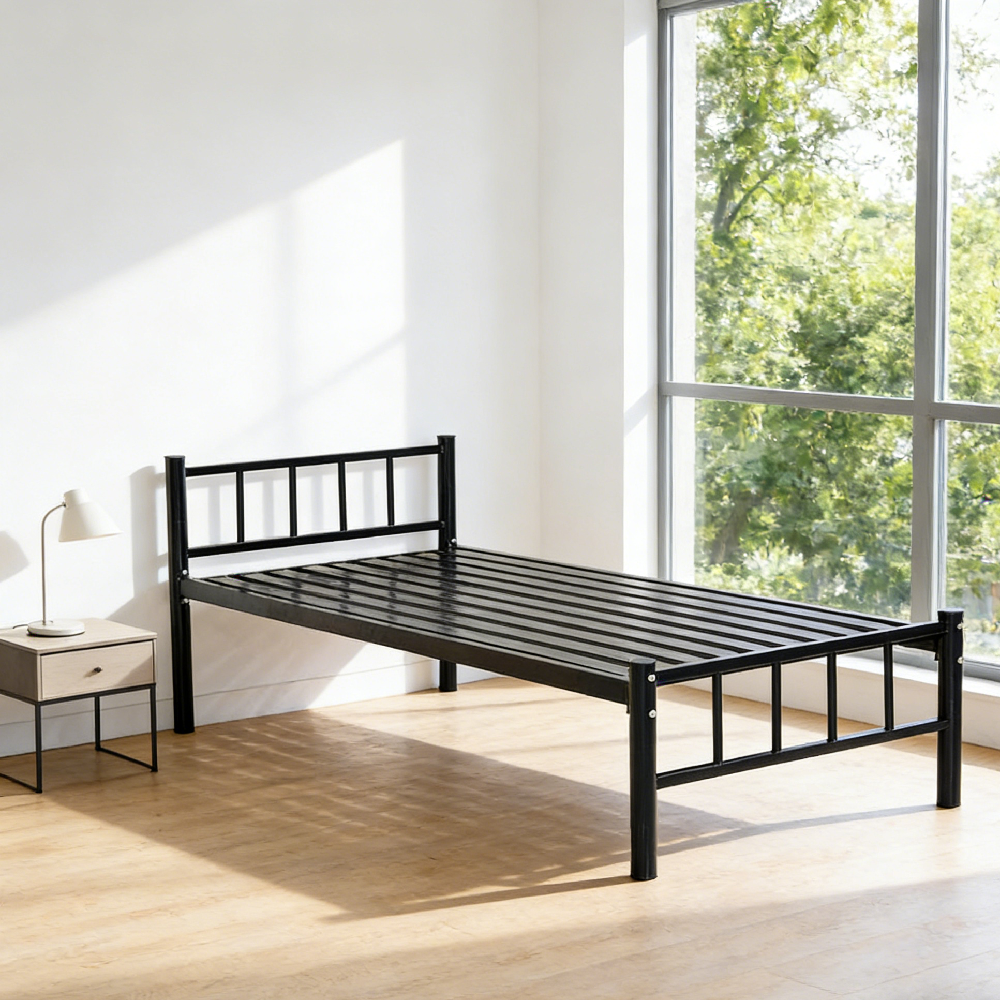
Example Product: Basic Steel Single Bed Frame
- Specifications: 1.2mm steel tubing, powder-coated black or white, wooden slats, flat-packed (KD)
- Container: 40ft High Cube (fits approximately 200-250 flat-packed single beds)
| Cost Component | Estimated Cost (USD) | Notes |
|---|---|---|
| Ex-Works Factory Price | $25 - $35 per unit | Varies by steel gauge, finish, and order volume |
| Ocean Freight (2026) | $2,500 - $4,500 per container | Prices have stabilized but remain volatile |
| Insurance | $50 - $100 per container | Typically 0.1-0.3% of cargo value |
| Import Duties (US) | ~$3 - $5 per unit | Varies by country of origin and trade agreements |
| Import Duties (UK) | ~$5 - $7 per unit | Standard tariff rates apply |
| Port Handling / Trucking | $500 - $1,000 per container | Local drayage to your warehouse |
| Warehousing (First Month) | Variable | Depends on your storage situation |
Landed Cost Calculation (Per Unit)
Let's do the math for a mid-range scenario:
- Factory Price: $30 per bed
- Freight & Insurance: $4,000 container ÷ 220 beds = ~$18 per bed
- Duties & Handling: ~$8 per bed
Total Landed Cost: Approximately $56 per bed
This means before you do anything—before marketing, before sales, before delivery—that bed sitting in your warehouse cost you $56.
What Can You Sell It For?
Now for the exciting part. What can you actually charge for this bed?
The answer depends entirely on who you sell to and what value you add.
Scenario A: B2C (Direct to Consumer via Amazon/eBay)
If you sell directly to consumers online, you are competing with thousands of other sellers. Pricing is aggressive.
- Retail Price: $89 - $129
- Gross Profit Per Unit: $33 - $73
- Platform Fees (Amazon/eBay): 15-20% ($13 - $26)
- Shipping to Customer: Often "free" but you pay $10 - $20
- Net Profit Per Unit: $10 - $30
Verdict: Volume is everything. You need to move hundreds of units per month to make real money. One bad review or a return can wipe out several sales' profits.
Scenario B: B2B (Selling to Local Retailers)
This is where wholesale margins get interesting. You sell in bulk to furniture stores, gift shops, or hotel suppliers.
- Wholesale Price to Retailer: $85 - $95
- Your Cost (Landed): $56
- Gross Profit Per Unit: $29 - $39
- Selling Expenses: Lower (fewer transactions, no shipping to individual customers)
Verdict: Lower volume per transaction but healthier margins and less operational headache. A single pallet sale to a local store can net you $300-$400 profit.
Scenario C: Commercial Contracts (Hotels, Hostels, Universities)
This is the holy grail for steel bed suppliers. Commercial buyers need durability, safety certifications, and reliable delivery. They are less price-sensitive than individual consumers.
- Contract Price: $100 - $130 (with warranty and certification documents)
- Your Cost (Landed, possibly upgraded gauge): $60 - $70
- Gross Profit Per Unit: $40 - $60
- Order Size: Often 50-500+ units in a single order
Verdict: Higher barriers to entry (you need certifications and references), but the profits are substantial. One contract can make your year.
Hidden Costs That Eat Margins
Many new importers calculate their profits based on landed cost and selling price, then wonder why their bank account doesn't reflect their success. Here are the silent margin-killers:
1. Storage and Warehousing
Steel beds take up space. Even flat-packed, they are bulky. If you're paying monthly storage, that cost eats into your profit with every week the beds sit unsold.
Solution: Pre-sell where possible. Have orders lined up before the container arrives.
2. Defects and Returns
A 2% defect rate sounds acceptable until you calculate the true cost. You pay for the defective unit, you pay return shipping (or replacement shipping), and you lose the customer's future business.
Solution: Invest in quality control before shipment. A $300 third-party inspection is cheap insurance against a $3,000 defective container.
3. Chargebacks and Disputes
If selling on marketplaces, customers can file chargebacks. If selling to retailers, they may demand discounts for minor scratches.
Solution: Build a small buffer (1-2%) into your pricing for "shrinkage" or negotiate clear return policies upfront.
4. Cash Flow Drag
Money tied up in inventory is money not working for you. If your inventory turns over slowly (e.g., once per year), your effective return on investment drops significantly.
Solution: Focus on faster-selling designs. Don't order 1,000 units of an untested style. Test with 200 first.
Strategies to Maximize Margins in 2026
So, how do successful importers hit 30-40% net margins while others struggle at 10%?
Strategy 1: Move Up the Value Chain
Selling a basic black steel bed is a commodity business. You compete on price. Instead, offer:
- Better Finishes: Hammered textures, antique bronze, or white glove powder coating.
- Added Features: Built-in USB ports, upholstered headboard attachments, or under-bed storage drawers.
- Bundles: Bed + mattress + bedding as a "room in a box."
Higher perceived value = higher prices without proportionally higher costs.
Strategy 2: Optimize Your Shipping
Ocean freight remains a major cost. Smart importers:
- Consolidate Orders: Fill containers completely. Air is expensive; steel is heavy.
- Choose Ports Wisely: Shipping to a major port (LA, NY, Felixstowe) is cheaper than inland delivery. Arrange your own trucking from the port.
- Time Your Orders: Avoid peak season (August-October) when freight rates spike.
Strategy 3: Build Direct Relationships
Every middleman between you and the factory takes a cut. If you're serious about volume, visit China. Meet factory owners. Build relationships. The best prices are reserved for people, not email addresses.
Strategy 4: Specialize
Don't try to sell every type of bed. Become the expert in one niche:
- "The Go-To Supplier for Dormitory Steel Beds"
- "Premium Heavy-Duty Beds for Plus-Size Sleepers"
- "Eco-Friendly Steel Beds with Recycled Materials"
Specialization allows you to charge premium prices and attract loyal customers who value expertise over cheap prices.
The Verdict: Is Steel Furniture Still Lucrative?
Yes, absolutely. But the landscape has changed.
| Factor | 2019 | 2026 |
|---|---|---|
| Entry Barrier | Low | Medium (need more capital) |
| Competition | Growing | Fierce (but niches exist) |
| Freight Costs | Low | High (but stable) |
| Margins | 30-50% | 15-30% (with smart sourcing) |
| Opportunity | Volume game | Value-add game |
The importers making money in 2026 aren't the ones chasing the absolute lowest factory price. They are the ones who:
- Understand their true landed costs
- Choose profitable niches over crowded markets
- Build real relationships with reliable suppliers
- Add value that justifies higher prices
Final Thought
If you treat steel beds as a commodity, you will compete on price until you have no margin left.
If you treat them as a solution to your customers' needs—durability, style, space-saving, safety—you will find plenty of profit waiting for you.
The beds haven't changed. The market has. Adapt, and you'll thrive.