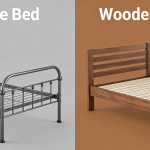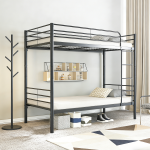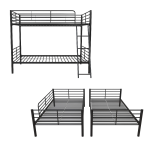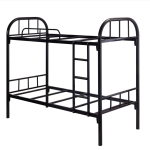

When you think of a classic metal bed frame, you might picture an old-fashioned iron bedstead with ornate curly details—the kind you see in vintage hotels or antique shops.
But here's the truth: most modern "iron" beds you see today aren't actually made of iron. And there's a very good reason for that.
If you are in the market for a durable, long-lasting metal bed frame for daily use, Steel is the superior choice. While iron has its nostalgic charm, steel is the workhorse material that suits modern living.
Here is why steel beats iron for everyday sleep, comfort, and practicality.
1. Strength-to-Weight Ratio: Steel Wins
Let's talk about the fundamental difference between these two metals.
- Iron (specifically cast iron) is incredibly strong, but it is also brittle. It can withstand heavy weight pressing down on it, but if you hit it with a sharp impact or drop it, it can crack or shatter.
- Steel (an alloy of iron and carbon) is designed to be both strong and flexible. It has a much higher tensile strength, meaning it can bend under stress without breaking.
What this means for your bed:
Moving houses? A steel frame can handle the bumps and jostles of a moving truck. An antique iron frame? One wrong knock during transport, and you might have a cracked side rail. For daily use where furniture gets bumped by vacuum cleaners or kids playing, steel's resilience is a major advantage.
2. Weight: The Practicality Factor
Have you ever tried to lift a cast iron radiator? That heavy, unyielding weight is what an iron bed feels like.
- Iron Beds: They are notoriously heavy. Once you place an iron bed in a room, it essentially lives there forever. Rearranging the bedroom or deep cleaning under the bed becomes a Herculean task requiring multiple people.
- Steel Beds: Steel allows manufacturers to create hollow tubes and frames that are just as strong as iron but significantly lighter.
The Daily Use Benefit: If you like to refresh your room layout, or if you are a renter who moves every few years, a steel bed frame is a gift. It is light enough to be maneuverable but strong enough to last. You can actually lift the corner of a steel bed to tuck in a rug or mop the floor.
3. The Rust Resistance Factor
This is perhaps the most critical difference for daily use.
- Iron: Unprotected iron rusts aggressively. It flakes and pits over time. An iron bed requires constant maintenance—painting and priming—to keep the rust at bay. If the paint chips on an iron bed and moisture hits it, the rust will spread like a disease.
- Steel: While steel can also rust, modern steel bed frames are almost always treated with a powder-coated finish. This baked-on enamel layer is far more durable than paint. It resists chipping, and if it does get scratched, the underlying steel is often more resistant to rapid oxidation than raw iron.
The Verdict: For daily use, you want furniture that can handle a little humidity or an accidental spill without requiring immediate restoration. Steel's compatibility with modern finishing techniques makes it far more "liveable."
4. Noise: The Silent Sleeper
Nobody wants a bed that announces every time you roll over.
- Iron: Because iron is a dense, crystalline material, it can transmit vibrations quite effectively. Older iron beds are notorious for creaking and groaning, often because the joints (which may have been welded or simply bolted) loosen over time and the rigid iron has no "give."
- Steel: High-quality steel beds are engineered with noise reduction in mind. The slight flexibility of steel helps absorb movement rather than transmitting it. Furthermore, modern steel frames often use bolt-and-locknut systems with plastic washers or nylon inserts to prevent metal-on-metal squeaking.
For a peaceful night's sleep in a bedroom used every day, steel offers a much quieter experience.
5. Design Flexibility
While antique lovers might miss the intricate scrollwork of Victorian iron beds, steel offers a design language that fits modern homes.
- Iron is difficult to manipulate into complex shapes without casting, which is expensive.
- Steel can be bent, rolled, and welded into sleek, minimalist forms. This allows for the slim-line profiles we love in Scandinavian and industrial design. Steel frames can be incredibly thin, taking up less visual space in a small apartment—something bulky iron castings cannot achieve.
6. Cost-Effectiveness
Because steel is easier to manufacture with modern machinery (CNC bending, robotic welding) and the raw material is abundant, steel beds are significantly more affordable than comparable antique or reproduction iron beds.
You get a stronger, lighter, and more durable product for a fraction of the cost of maintaining an old iron bed.
The Bottom Line
Is iron beautiful? Yes. Is it the right choice for a historic home or a specific vintage aesthetic? Absolutely.
But for daily use—for the bed you sleep in every night, the bed that needs to survive kids jumping on it, the bed that needs to move houses, and the bed that needs to stay quiet and rust-free—steel is the smarter choice.
It combines the strength of metal with the practicality required for modern living. When you buy a steel bed frame, you aren't just buying a place to sleep; you are buying peace of mind.