
Choosing a bed might seem simple, but when you are standing in that furniture aisle (or scrolling through endless web pages), the debate often comes down to two main contenders: Steel or Wood.
If you are shopping for a single bed—whether for a child’s first big-kid room, a cozy guest room, or a space-saving dorm setup—the material you choose will impact everything from the room's style to your long-term comfort and your wallet.
So, let’s settle the score. Here is everything you need to know about Steel vs. Wooden Single Beds.
At a Glance: The Key Differences
Before we dive deep, here is a quick snapshot of how these two materials stack up against each other:
| Feature | Steel Single Beds | Wooden Single Beds |
|---|---|---|
| Style | Modern, Industrial, Minimalist | Classic, Warm, Rustic, Traditional |
| Durability | High (Metal, resistant to warping) | High (Depends on wood type) |
| Weight | Light to Medium | Heavy (Solid wood) |
| Maintenance | Easy (Wipe clean) | Moderate (Needs polishing, care) |
| Price Range | Budget to Mid-Range | Mid-Range to Luxury |
| Noise Factor | Can squeak if assembly is loose | Usually silent |
| Space Saving | Often features slim lines, sleek look | Often bulkier, more visual weight |
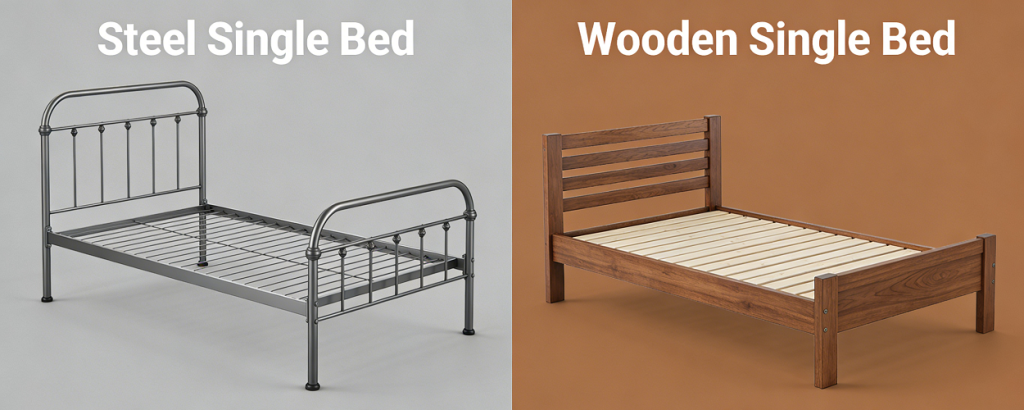
The Case for Steel Single Beds
Steel beds have evolved significantly from the cold, sterile frames you might remember from school dorms or hospitals. Modern steel beds are sleek, sturdy, and surprisingly stylish.
1. The Modern Aesthetic
If your home decor leans toward industrial, Scandinavian minimalism, or modern chic, steel is your friend. The slim lines of a steel frame take up less visual space than a bulky wooden headboard. This makes the room feel larger and airier.
2. Durability That Lasts
Wood can warp, crack, or swell in humid conditions. High-quality steel (usually powder-coated to prevent rust) does not warp. It remains as straight and strong on year five as it was on day one. This makes it an excellent choice for coastal areas or humid climates.
3. The Weight Factor
Steel beds are generally lighter than solid wood beds. This is a massive advantage if you are a renter who moves frequently or if you like to rearrange the bedroom layout often. You can easily lift and slide a steel frame without needing three people to help.
4. Budget-Friendly
Generally speaking, you can get a very sturdy, high-quality steel bed frame for a lower price point than a comparable solid wood bed. If you are furnishing a home on a budget or need multiple beds (like for a hostel or guest rooms), steel offers incredible value.
5. Easy Maintenance
Spilled some water? Dust bunnies? Just grab a damp cloth. Steel frames don’t require special polish or treatments. A quick wipe-down is all it takes to keep them looking brand new.
The Downsides:
- Cold to the Touch: Steel can feel cold, especially in winter. However, this is easily mitigated with soft bedding and a warm duvet.
- Potential for Noise: If screws loosen over time, steel frames can develop a squeak. (Pro tip: A quick tightening of the bolts every few months solves this).
- Dents: While strong, a heavy impact might dent the frame.
The Case for Wooden Single Beds
Wood is the timeless classic. It brings a sense of warmth and permanence to a room that is hard to replicate with metal.
1. Timeless Warmth and Beauty
Wood simply feels cozy. The natural grains and tones add a layer of texture and warmth that metal cannot. Whether you choose a rich oak, a light pine, or a reclaimed barn wood look, a wooden bed often becomes the heart of the room.
2. Incredible Sturdiness
A high-quality solid wood bed is a tank. These frames are built to last for decades. Unlike steel, a well-maintained wooden bed can even become a family heirloom. If you want a bed that you will never have to replace, wood is the way to go.
3. Variety of Styles
Wood is incredibly versatile. You can find:
- Sleek, painted finishes for a modern farmhouse look.
- Ornate, carved headboards for a traditional or vintage vibe.
- Rustic, live-edge designs for a natural, organic feel.
4. Silent Sleep
Wood frames tend to absorb vibration. Unless something is severely broken, a wooden bed frame will not squeak or creak when you move around, offering a more solid and quiet sleeping experience.
5. Eco-Friendly Options
If sustainability is a priority, many manufacturers offer beds made from reclaimed wood or sustainably sourced timber, making wood a more environmentally friendly choice than mined and manufactured steel.
The Downsides:
- Heavy and Hard to Move: Solid wood is heavy. Rearranging the room or moving houses becomes a major project.
- Susceptibility to Elements: Wood can be damaged by water, humidity, and pests. A spilled drink can leave a permanent stain if not wiped up immediately.
- Higher Cost: Good quality, solid wood costs money. Engineered wood (like MDF or particleboard) is cheaper but less durable than steel or solid timber.
The Verdict: Which One is Right for You?
So, steel or wood? There is no single "best" option—only the best option for you.
Choose the STEEL Single Beds if:
- You love modern, minimalist, or industrial decor.
- You are on a tight budget but need durability.
- You are a renter who moves frequently.
- The bed is for a child or teen who might need a low-maintenance, wipe-clean surface.
- You are worried about humidity damaging wood.
Choose the WOODEN Single Beds if:
- You want a classic, cozy, or rustic look.
- You are looking for a long-term investment piece.
- You prefer a heavy, solid feel that doesn't move an inch.
- You want a headboard with intricate detailing.
- Sustainability and natural materials are important to you.
Our Recommendation:
If you are outfitting a child’s room or a guest room, steel single beds offer unbeatable value and practicality. If you are furnishing your primary bedroom or a space where you want to create a warm, lasting impression, a wooden single bed is worth the investment.
Whichever you choose, make sure to check the quality of the craftsmanship. For steel, look for thick-gauge metal and a smooth powder-coated finish. For wood, look for solid joints (like dovetail or mortise and tenon) rather than just glue and staples.
Happy sleeping!