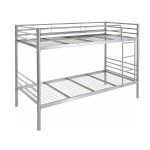

If you are sourcing steel single bed frames, you've seen the numbers: 1.0mm, 1.2mm, 1.5mm, 14-gauge, 16-gauge, 18-gauge.
But what do these numbers actually mean? And more importantly, what thickness do you need for beds that will truly last?
For regular consumers, any bed that doesn't collapse might seem "strong enough." But for importers, wholesalers, and commercial buyers, understanding steel gauge is the difference between supplying beds that last five years and dealing with warranty claims after five months.
This guide will demystify steel gauges and help you choose the right thickness for your market, your customers, and your bottom line.
What Is Steel Gauge?
Steel gauge is a measurement of the thickness of the steel used in the tubes, angles, or sheets that make up your bed frame.
Here's the tricky part: The gauge system is inverse.
- Lower gauge number = Thicker steel
- Higher gauge number = Thinner steel
| Gauge | Thickness (Inches) | Thickness (Millimeters) |
|---|---|---|
| 10-gauge | 0.1345" | 3.42 mm |
| 12-gauge | 0.1046" | 2.66 mm |
| 14-gauge | 0.0747" | 1.90 mm |
| 16-gauge | 0.0598" | 1.52 mm |
| 18-gauge | 0.0478" | 1.21 mm |
| 20-gauge | 0.0359" | 0.91 mm |
Note: Most steel furniture suppliers quote thickness in millimeters (mm). Always confirm which measurement system they are using.
The "Heavy-Duty" Benchmark
So, what thickness actually qualifies as "heavy-duty"?
Based on industry standards and commercial applications, here is a general guide:
| Category | Thickness | Typical Use |
|---|---|---|
| Economy / Light-Duty | 0.8mm - 1.0mm (20-18 gauge) | Children's beds, temporary housing, budget retail |
| Standard / Medium-Duty | 1.2mm - 1.5mm (18-16 gauge) | Residential use, guest rooms, typical retail |
| Heavy-Duty / Commercial | 1.5mm - 2.0mm (16-14 gauge) | Hotels, hostels, dorms, plus-size sleepers |
| Industrial / Extreme | 2.0mm+ (14-12 gauge) | Hospitals, bariatric beds, military, prisons |
For genuine heavy-duty applications, you need at least 1.5mm (16-gauge) steel. For true commercial durability where beds will be used daily by different people, 2.0mm (14-gauge) is the gold standard.
Why Thickness Matters: The Four Critical Factors
1. Load-Bearing Capacity
The most obvious factor. Thicker steel simply holds more weight.
| Thickness | Recommended Weight Limit |
|---|---|
| 1.0mm | Up to 100 kg (220 lbs) |
| 1.2mm | Up to 120 kg (265 lbs) |
| 1.5mm | Up to 150 kg (330 lbs) |
| 2.0mm | Up to 200 kg+ (440 lbs+) |
Important: Weight limits also depend on design—number of support legs, cross braces, and slat quality. But steel thickness is the foundation.
2. Resistance to Bending and Flex
Ever sat on a cheap bed and felt the frame flex beneath you? That's thin steel.
With 1.5mm or thicker steel, the frame remains rigid. There is no "give" when someone sits on the edge. No wobble when two people move around. This rigidity is what customers feel as "quality."
3. Long-Term Durability
Thicker steel doesn't just resist weight; it resists metal fatigue.
Every time someone sits on a bed, the frame experiences microscopic stress. Over thousands of cycles, thin steel can develop micro-fractures or permanent bending. Thicker steel absorbs this stress without deforming.
For commercial applications where beds face constant use, this fatigue resistance is critical.
4. Weld Integrity
The joints of a steel bed are only as strong as the welds that hold them together—and the base metal those welds attach to.
On thin steel (below 1.2mm), welds can "burn through" or create weak spots. The heat affected zone around the weld becomes brittle. On thicker steel, welds penetrate properly and maintain their strength.
The Cost Trade-Off
Of course, thicker steel costs more. Let's look at the typical price progression:
| Thickness | Relative Material Cost | Typical Factory Price (Single Bed) |
|---|---|---|
| 1.0mm | Baseline (-20%) | $22 - $28 |
| 1.2mm | Baseline | $25 - $32 |
| 1.5mm | +15-20% | $30 - $38 |
| 2.0mm | +35-50% | $38 - $48 |
The Question: Is the extra cost worth it?
For home retail, single bed frames are used moderately, and 1.2 mm is usually sufficient. For commercial contracts where beds face heavy use and warranty claims are expensive, the extra cost of 1.5mm or 2.0mm pays for itself in reduced headaches.
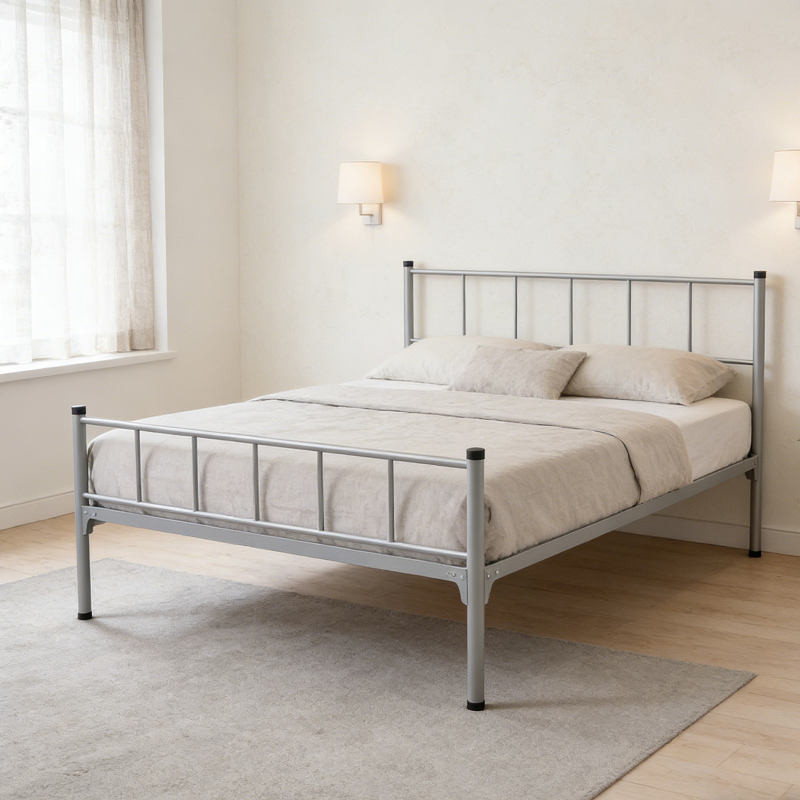
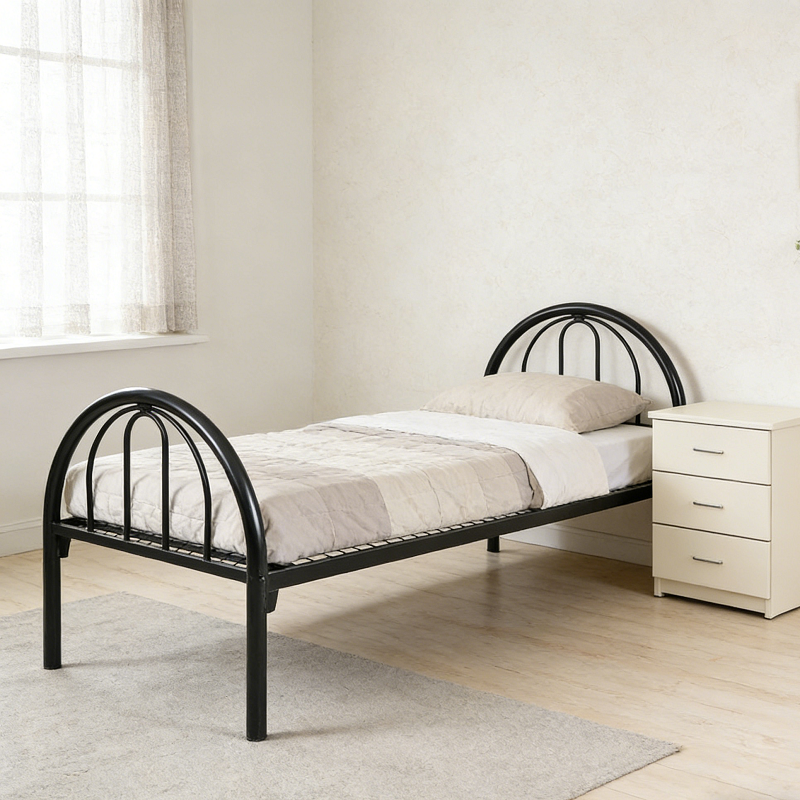
The "Cheater" Tricks: What Unscrupulous Suppliers Do
Unfortunately, some suppliers manipulate thickness claims to win orders. Here's what to watch for:
Trick 1: Quoting Wall Thickness Deceptively
Square steel tubes have four walls. Some suppliers quote the thickness of the steel sheet before it's rolled into a tube. The actual finished tube may be thinner due to stretching.
Solution: Ask for the exact finished wall thickness. Better yet, request a sample and measure it yourself with calipers.
Trick 2: Thick Main Frame, Thin Accessories
A supplier might use 1.5mm steel for the visible side rails but 0.8mm for cross supports, slat rails, or legs. The bed fails at the weak points.
Solution: Specify that all structural components must meet your thickness requirement. Get it in writing.
Trick 3: Inconsistent Thickness
Some factories use steel from different suppliers. Your first container might have 1.5mm steel. Your second container, from a different batch, might have 1.2mm. You won't know until customers start complaining.
Solution: Use third-party inspectors for every shipment. Have them measure random samples.
Trick 4: The "Heavy-Duty" Label
There is no legal definition of "heavy-duty." Any supplier can slap this label on any bed.
Solution: Ignore marketing terms. Demand specifications in writing.
Matching Gauge to Market: A Decision Matrix
Use this guide to choose the right thickness for your target customers:
| Your Target Market | Recommended Thickness | Why |
|---|---|---|
| Budget Retail (Amazon/Walmart) | 1.0mm - 1.2mm | Price-sensitive customers; acceptable for light use |
| Mid-Range Residential | 1.2mm - 1.5mm | Balances cost with durability for everyday home use |
| Plus-Size / Bariatric | 2.0mm minimum | Safety and liability concerns require serious strength |
| Hotels | 1.5mm - 2.0mm | Daily use by strangers; reputation depends on durability |
| Hostels / Dorms | 1.5mm - 2.0mm | Rough treatment; high turnover; minimal maintenance |
| Student Housing | 1.5mm | Active young adults; party risks; frequent moves |
| Healthcare / Assisted Living | 2.0mm+ | Safety-critical; may need medical-grade certifications |
Beyond Thickness: Other Factors That Affect Strength
Steel gauge isn't the only factor. Smart buyers also consider:
Steel Grade
- Mild steel (Q195/Q235): Standard for most furniture
- Higher-grade steel (Q345): Stronger but more expensive and harder to weld
- Stainless steel: Rust-proof but much more expensive
Tube Shape and Size
- Round tubes: Stronger in all directions
- Square/rectangular tubes: Stronger in specific orientations
- Larger diameter tubes: Can use thinner walls while maintaining strength
Design Engineering
- Number of cross braces
- Leg placement and quantity
- Weld quality and pattern
- Gussets and reinforcement at stress points
A well-designed 1.2mm bed can outperform a poorly designed 1.5mm bed. But given similar designs, thickness wins.
How to Verify What You're Getting
Don't trust supplier claims. Verify.
Before Ordering:
- Request specifications in writing including exact thickness in mm
- Ask for the steel mill certificate showing the source material
- Order a sample and measure it yourself with calipers
- Measure at multiple points—tubes can vary slightly in manufacturing
During Production:
- Hire a third-party inspector
- Have them measure random samples from production
- Test assembly to ensure holes align despite thicker steel
- Check welds for proper penetration on thicker material
After Arrival:
- Spot-check your container before distributing to customers
- Keep records in case future warranty issues arise
The Bottom Line
For genuine heavy-duty single bed frames, 1.5mm (16-gauge) is the minimum. 2.0mm (14-gauge) is the standard for serious commercial applications.
Yes, thicker steel costs more upfront. But consider the total cost of ownership:
- Fewer warranty claims
- Happier customers
- Longer product life
- Better reputation
- Ability to charge premium prices
In the steel bed business, thickness is not just a specification. It's a promise to your customers that what they're buying will last.
Don't let that promise be hollow.