
Shopping for a single bed might seem simple. But walk into any furniture store or scroll through online listings, and you're immediately faced with decisions: wood or metal? Slats or solid platform? Low profile or high clearance?
If you're feeling overwhelmed, you're not alone. A bed is an investment in your sleep, your comfort, and your bedroom's style. Making the right choice matters.
This comprehensive buyer's checklist will walk you through everything you need to consider—and show you why steel frames deserve a closer look.
Why This Checklist Matters
Before we dive into the specifics, understand this: your bed frame is the foundation of your sleep system. A great mattress on a poor frame will sag, squeak, and fail prematurely. A quality frame, however, will:
- Extend your mattress life by providing proper support
- Eliminate annoying noises that disrupt sleep
- Create the aesthetic foundation for your bedroom
- Deliver years or decades of reliable service
Let's start with the most fundamental question: what material should you choose?
Material Matters: Steel vs. Wood
The material of your bed frame influences everything—durability, maintenance, cost, and style. Here's how steel and wood compare across the factors that matter most.
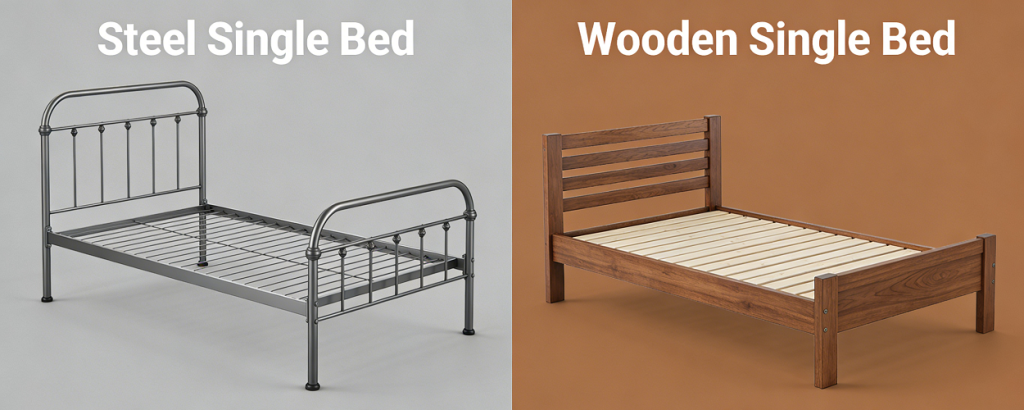
Steel Frames: The Smart Choice
What They Are: Steel frames are constructed from hollow or solid steel tubing, typically finished with powder coating for durability and appearance .
Pros:
- Exceptional strength-to-weight ratio: Steel offers tremendous strength without excessive weight, making frames sturdy yet manageable .
- Budget-friendly: Generally, steel frames cost less than quality wooden frames while providing excellent durability .
- Low maintenance: No polishing, sanding, or special treatments needed. A simple wipe-down keeps them clean .
- Pest-resistant: Steel doesn't attract termites, beetles, or other wood-boring insects .
- Environmentally adaptable: Won't warp, crack, or swell in humid conditions .
- Sleek, modern aesthetic: Clean lines complement contemporary and industrial design styles .
Cons:
- Potential for squeaks: Some steel frames develop noise over time as connections loosen .
- Can feel cold: Metal conducts temperature, so frames may feel cool to the touch in winter .
- Limited refinishing options: Unlike wood, steel can't be sanded and restained—though it can be repainted.
Wooden Frames: The Traditional Choice
What They Are: Wood frames range from solid hardwoods (oak, maple, walnut) to engineered woods (pine, rubberwood) and composites .
Pros:
- Natural warmth and beauty: Wood grain adds organic texture and timeless appeal to any bedroom .
- Generally quiet: Well-constructed wooden joints resist loosening and remain silent .
- Refinishable: Can be sanded, stained, or painted to change appearance .
- Classic styling: Works with traditional, rustic, Scandinavian, and many other design styles.
Cons:
- Higher cost: Quality hardwood frames command premium prices .
- Heavy and difficult to move: Solid wood is substantially heavier than steel .
- Susceptible to moisture: Wood can warp, crack, or stain from spills and humidity .
- Pest vulnerability: Termites and other insects can damage wooden frames .
- Maintenance required: May need periodic polishing, oiling, or refinishing .
The Verdict on Materials
Steel frames offer superior value, durability, and practicality for most buyers. They're ideal if you:
- Have a moderate budget but refuse to compromise on quality
- Live in a humid environment or worry about pests
- Prefer modern, minimalist, or industrial aesthetics
- Want furniture that's easy to maintain and move
- Suffer from allergies (steel collects less dust)
Choose wood if you:
- Have a higher budget and value traditional aesthetics
- Want furniture that can be refinished over decades
- Prioritize natural materials and warmth
- Live in a very dry climate
Your Single Bed Buyer's Checklist
Now that you understand material options, use this checklist to evaluate any single bed before purchasing.
1. Measure Your Space
Before looking at any beds, know your room dimensions.
Key measurements:
- Room length and width
- Doorway and hallway clearance (for delivery)
- Window and closet door swing zones
- Existing furniture placement
Single bed standard sizes:
- US Twin: 38" x 74" (97cm x 188cm)
- US Twin XL (common in dorms): 38" x 80" (97cm x 203cm)
- UK/EU Single: 36" x 75" (90cm x 190cm)
Pro tip: Add 24-30 inches around the bed for walking clearance.
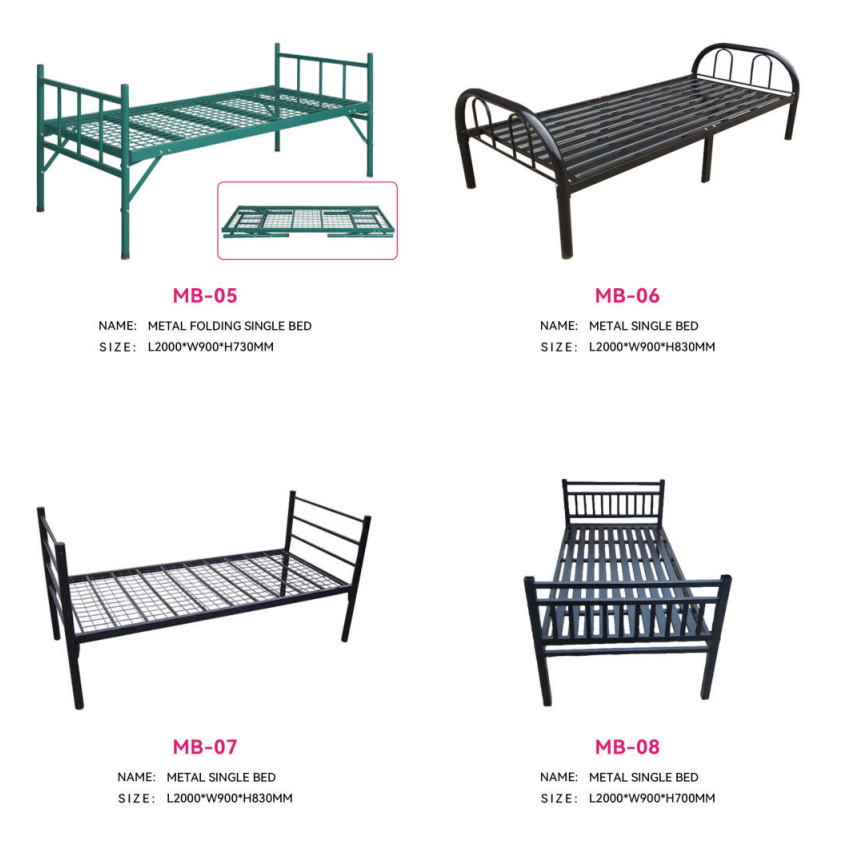
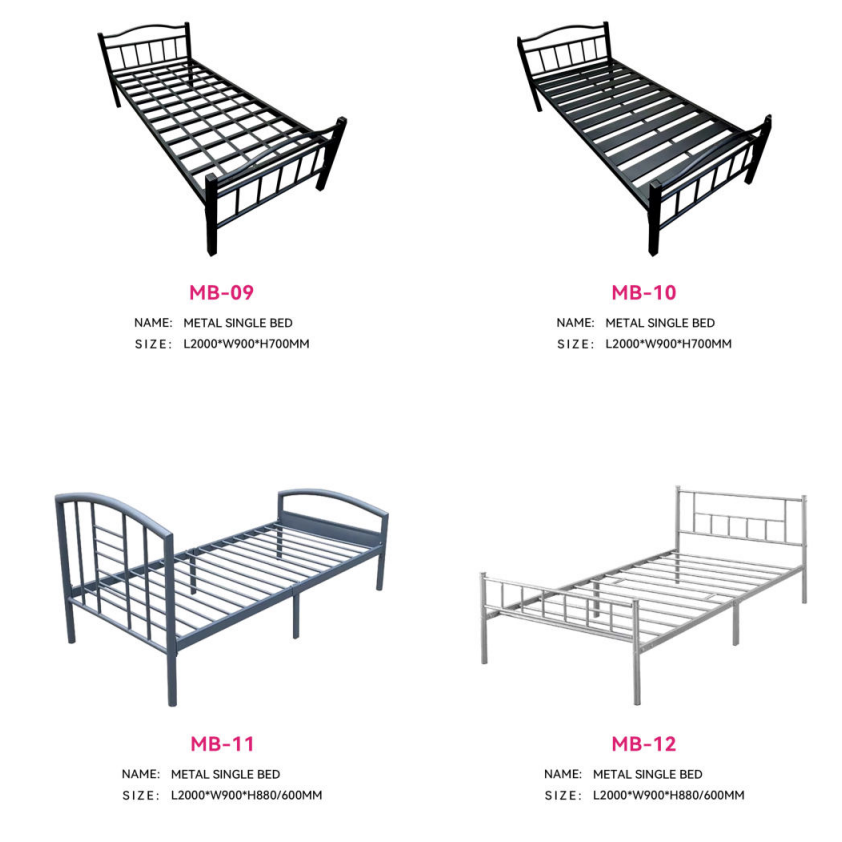
2. Check Frame Construction Quality
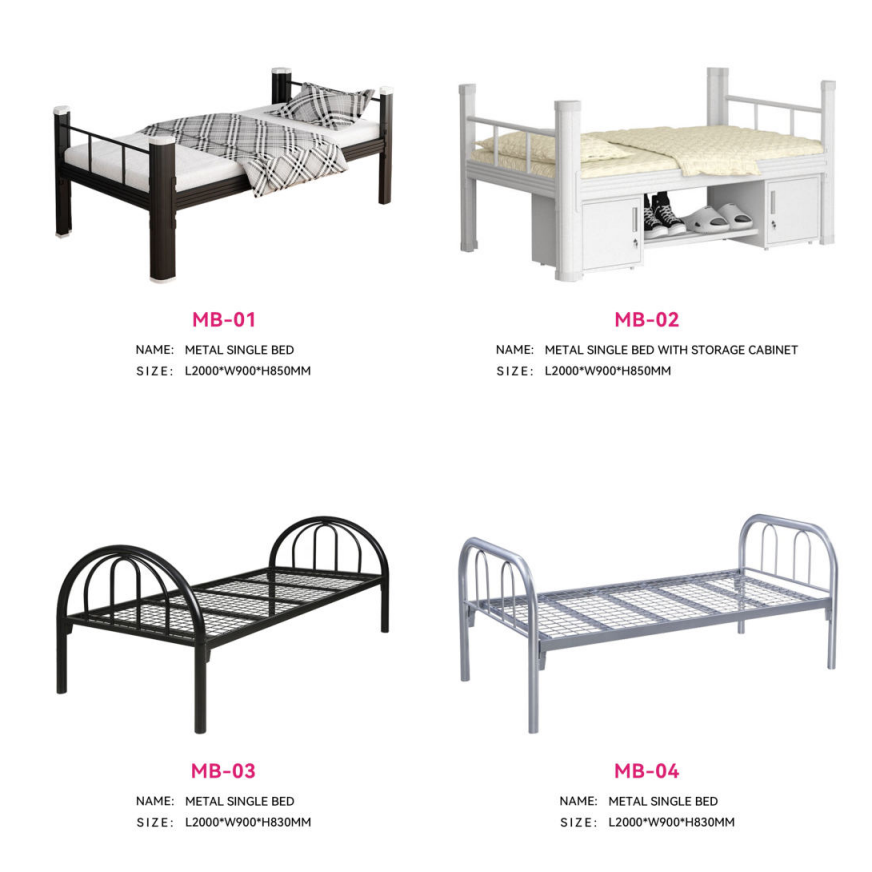
Not all steel frames are created equal. Look for:
Steel gauge (thickness):
- 1.0mm - 1.2mm: Standard residential, adequate for most users
- 1.5mm+: Heavy-duty, recommended for larger individuals or daily commercial use
Higher gauge numbers mean thinner steel. Lower numbers = thicker, stronger steel.
Welds: Inspect photos or samples for smooth, continuous welds with no gaps or rough spots .
Joints: Quality frames use reinforced connections, not just minimal screws .
Finish: Look for powder-coated surfaces (not painted). Powder coating resists chipping, scratching, and rust far better than liquid paint .
3. Evaluate Mattress Support
Your bed frame must properly support your mattress type.
Slat spacing: For foam mattresses (memory foam, latex), slats should be no more than 2-3 inches (5-7cm) apart . Wider spacing causes sagging and voids warranties.
Center support: For queen and larger beds, look for a center support rail with legs touching the floor. For single beds, this is less critical but still beneficial .
Weight capacity: Quality steel frames typically support 500-800 pounds, accommodating most users and mattress types comfortably .
4. Consider Noise Prevention
Nobody wants a squeaky bed. Look for these noise-dampening features:
- Rubber or nylon bushings at connection points to prevent metal-on-metal contact
- Felt-lined slat channels that absorb movement
- Bolted construction (with lock washers) rather than friction-fit connections
Maintenance tip: Even the best frames need occasional bolt tightening. Plan to check connections every 6 months .
5. Assess Height and Clearance
Bed height affects comfort, accessibility, and storage.
| Height Type | Measurement | Best For |
|---|---|---|
| Low profile | 5-8 inches | Minimalist look, children, seniors (easy access) |
| Standard | 10-14 inches | Most adults, standard mattress thickness |
| High profile | 15-18+ inches | Under-bed storage, taller individuals |
Consider: If you use under-bed storage bins, ensure adequate clearance. Measure your bins before buying .
6. Verify Assembly Requirements
Some steel frames require significant assembly. Ask:
- Are tools included?
- Are instructions clear and in your language?
- How long does assembly typically take? (Quality frames average 30-60 minutes)
- Can it be disassembled for moving?
Renter-friendly feature: Frames that break down easily are worth the extra effort if you move frequently.
7. Check Warranty and Return Policy
A warranty reflects manufacturer confidence.
- What's covered? Frame defects? Finish issues? Hardware?
- How long? 1-5 years is standard; lifetime warranties exist on premium frames
- Return policy: Can you return if unsatisfied? Who pays shipping?
Why Steel Frames Excel for Specific Situations
Beyond general benefits, steel frames shine in particular scenarios:
For Children's Rooms
Steel frames withstand active kids, resist spills and accidents, and won't harbor pests. Their lighter weight makes room rearrangement easier. Look for rounded corners and secure hardware .
For Dorms and Rental Properties
Durable, affordable, and easy to clean—steel frames are ideal for spaces with high turnover. Many dorm rooms require Twin XL sizes, which steel manufacturers readily produce .
For Guest Rooms
Steel frames offer reliable comfort without breaking the budget. Choose classic designs (black, white, gray) that suit any decor .
For Allergy Sufferers
Metal frames collect significantly less dust than wooden frames with intricate carvings. They don't harbor dust mites and are easy to wipe clean .
For Humid Climates
Unlike wood, steel won't warp, swell, or rot in humid environments. Quality powder coating prevents rust .
Red Flags to Avoid When Buying
Watch for these warning signs:
"Heavy-Duty" Claims Without Specifications
If a seller claims "heavy-duty construction" but won't specify steel gauge or weight capacity, be suspicious. Quality sellers provide details.
Unusually Low Prices
If a steel frame seems dramatically cheaper than competitors, something's compromised—thinner steel, poor finish, or weak joints.
Vague Warranty Language
"Limited warranty" without specifics often means little. Look for clear terms.
No Assembly Information
Frames requiring complex assembly should provide clear instructions. If none are visible, ask.
Poor Reviews About Noise
Multiple complaints about squeaking within months suggest poor design or materials.
Maintenance Tips for Long Life
Your steel frame will last decades with minimal care:
- Tighten bolts after the first two weeks, then every 6 months
- Clean with a soft cloth and mild detergent; avoid abrasives
- Check for rust in humid environments; touch up any chips promptly
- Use floor protectors under legs to prevent scratching hardwood
- Vacuum underneath regularly to prevent dust buildup
The Bottom Line
A single bed is more than just a place to sleep—it's the foundation of your daily rest and recovery.
Steel frames offer an unbeatable combination of strength, affordability, and practicality. They support your mattress effectively, resist environmental damage, require minimal maintenance, and suit modern lifestyles perfectly.