
The parcel delivery box market is experiencing unprecedented growth. For property managers, e-commerce businesses, developers, and retailers, this rapid expansion presents a significant opportunity—but only if you can find the right wholesale partner. This guide provides a structured, step-by-step approach to identifying, vetting, and partnering with trustworthy wholesale parcel box suppliers.
Step 1: Define Your Sourcing Requirements
Before searching for suppliers, it is essential to get clear on what your business actually needs. This upfront clarity will help you filter out options that do not fit and focus only on those that do.
Product Quality and Specifications
Define the quality standards you need, including specific materials, certifications, and performance requirements. For parcel delivery boxes, key specifications to determine upfront include:
- Steel gauge and material (galvanized steel, stainless steel, or powder-coated options)
- IP rating for weather resistance (IP54 for basic outdoor use, IP65 for fully exposed locations)
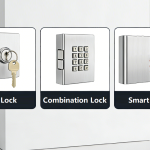
- Lock type (key lock, combination lock, or smart lock with Bluetooth/Wi-Fi/cellular connectivity)
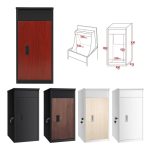
- Dimensions and capacity (small, medium, large, or extra-large)
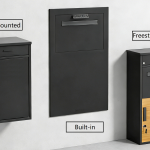
- Mounting type (wall-mount, post-mount, embedded, or freestanding)
Quantity and Minimum Order Quantities
Determine the volume you need. Are you looking for a one-time bulk order, or will you require regular shipments? Most manufacturers require a Minimum Order Quantity (MOQ), which is the smallest amount they are willing to produce or sell. Make sure their MOQ aligns with your needs and budget. For parcel delivery boxes, MOQs typically range from 50 to 500 units, depending on the level of customization required.
Delivery Timeline and Budget
Establish your delivery timeline. Are there specific deadlines for project completions or seasonal inventory needs? Also set a realistic budget. Consider not only the cost of the products but also shipping, taxes, duties, and any additional fees.
Production Model
Determine whether you need a supplier to design and manufacture a custom product from scratch (OEM/ODM) or if you are sourcing from a wholesaler with existing product lines. Different suppliers specialize in different production models.
Step 2: Search for Potential Suppliers
Once you know exactly what you need, it is time to start searching. Several channels can help you identify qualified wholesale parcel delivery box suppliers.
B2B Platforms
Platforms like Alibaba, Made-in-China, and Global Sources remain the primary hubs for wholesale sourcing. These platforms provide access to thousands of suppliers, often with verified badges, transaction histories, and customer reviews. For parcel delivery boxes specifically, China remains the world’s dominant producer, thanks to its advanced manufacturing infrastructure, skilled labor force, and integrated supply chains.
Industry Directories and Trade Shows
Thomasnet is an excellent resource for finding industrial and commercial suppliers in North America. Trade shows such as the National Hardware Show, CES, and industry-specific logistics expos also provide opportunities to meet suppliers face-to-face and evaluate their products firsthand.
Referrals and Industry Networks
Leverage your professional network. Other property managers, developers, or retailers who have already sourced parcel delivery boxes can provide valuable recommendations and warnings about specific suppliers.
Step 3: Vet Suppliers Using a Structured Checklist
Finding a supplier is only half the battle—vetting them properly is where the real work begins. Effective supplier evaluation goes far beyond confirming contact details or product availability. It should incorporate measurable KPIs such as on-time delivery rates, communication efficiency, financial stability, and customization capability.
Production Capabilities and Scalability
Assess whether the manufacturer can meet your volume requirements without compromising timelines. Key indicators include:
| Evaluation Factor | What to Look For |
|---|---|
| Factory size | Ideally 3,400m² or larger for significant production capacity |
| Production lines | Multiple dedicated assembly lines for parcel box manufacturing |
| Workforce size | Adequate staffing to handle your order volume |
| Lead time consistency | Track record of meeting quoted production schedules |
For parcel delivery boxes specifically, different manufacturing hubs in China offer specialized advantages. Guangdong Province excels in smart lockers with IoT connectivity, biometric access, and real-time tracking. Jiangsu and Zhejiang provinces specialize in precision metal fabrication and electronic component integration, often reducing lead times by up to 30%. Henan Luoyang features large-scale factories offering competitive pricing for bulk orders of standardized units.
Quality Assurance and Certifications
A reliable supplier should adhere to international standards. Key certifications to look for include:
- ISO 9001: Indicates a robust quality management system
- CE Marking: Required for entry into European markets
- RoHS Compliance: Ensures environmentally safe materials
- UL/ETL Certification: Validates electrical safety for smart lockers
Beyond certifications, conduct due diligence through sample testing under real-world conditions, including humidity exposure, temperature cycling, and impact resistance.
Financial Stability and Operational Performance
One of the most reliable indicators of supplier trustworthiness is documented performance history. Key metrics to evaluate include:
- On-time delivery rate: Aim for suppliers with ≥95% on-time fulfillment
- Response time: Fast replies (≤4 hours) reflect commitment to client service
- Reorder rate: High repeat order percentages (ideally above 30%) indicate customer satisfaction and service consistency
- Transaction volume: Annual online revenue exceeding $100,000 suggests market validation and financial stability
- Verification status: Look for trusted provider badges or multispecialty certifications on B2B platforms
Technical Expertise and Product Design Capabilities
A top-tier parcel delivery box supplier must demonstrate proficiency in both physical construction and digital integration. Look for experience in:
- Weatherproofing (IP54 or higher ratings)
- Corrosion-resistant materials (stainless steel, galvanized steel, UV-stabilized polymers)
- Digital locking mechanisms (PIN codes, QR scanning, NFC)
- IoT connectivity (Wi-Fi, 4G/5G) and remote monitoring dashboards
- Energy efficiency (solar compatibility, low-power modes)
Customization Capability
A supplier’s willingness and ability to customize products often correlates with their adaptability in documentation and compliance processes. Customization options such as material selection, branding, packaging design, and labeling suggest a mature production system capable of handling tailored requirements.
Transparency and Communication
Clear pricing, transparent MOQ policies, and detailed product specifications reduce ambiguity. Evaluate how potential suppliers communicate during the vetting process—are they responsive, knowledgeable, and forthcoming about their capabilities and limitations?
Step 4: Request and Evaluate Samples
Never commit to a bulk order without first evaluating physical samples. This step is non-negotiable for parcel delivery boxes, where quality issues may not be apparent from product photos alone.
When evaluating samples, pay attention to:
- Material quality: Verify steel gauge, weld quality, and finish consistency
- Lock functionality: Test all locking mechanisms multiple times
- Weather resistance: If possible, perform water spray tests to simulate rain exposure
- Assembly and installation: Confirm that mounting hardware is adequate and instructions are clear
- Dimensions: Measure internal and external dimensions against specifications
For smart parcel delivery boxes, also test connectivity features, app functionality, and battery life.
Step 5: Negotiate Terms and Protect Your Interests
Once you have identified a qualified supplier and approved samples, it is time to formalize the partnership. Key terms to negotiate include:
Payment Terms
Standard payment terms in international sourcing are often 30% deposit and 70% balance before shipment. However, depending on order size and relationship history, you may negotiate 30/70 with payment against shipping documents or letter of credit (L/C) terms. Use secure payment methods such as trade assurance or escrow services to protect against non-delivery or discrepancies.
Minimum Order Quantities
Understand the MOQ for your specific product configuration. Some suppliers offer tiered pricing that makes larger orders significantly more cost-effective per unit. Balance MOQ requirements against your inventory turnover needs.
Lead Times and Shipping
Establish clear production and shipping timelines in writing. Factor in potential delays such as Chinese public holidays (particularly Chinese New Year) and peak shipping seasons. Confirm Incoterms (FOB, CIF, DDP) and who bears responsibility for shipping, insurance, and customs clearance.
Quality Control and Inspection
Specify quality control procedures, including in-process inspections and pre-shipment inspection protocols. For large or high-value orders, consider hiring third-party inspection services to verify quality before shipment.
Warranty and After-Sales Support
A reliable supplier should offer a clear warranty on structure (typically 5–10 years), finish (3–5 years), and locks (1–3 years). Understand the claims process and whether the supplier stocks spare parts for future repairs.
Step 6: Stay Compliant with Import Regulations
For international buyers, particularly those importing into the United States, recent regulatory changes have made compliance more critical than ever.
As of May 2, 2025, the China-to-U.S. de minimis treatment is effectively closed. The $800 duty-free threshold no longer applies to goods imported from or manufactured in China. All shipments entering the United States, regardless of value or country of origin, are now subject to applicable duties and formal or informal entry requirements.
What this means for your sourcing strategy:
- Factor duties and tariffs into your total landed cost calculations
- Work with a customs broker or freight forwarder experienced with the latest regulations
- Ensure accurate HTS (Harmonized Tariff Schedule) classification of your parcel delivery boxes
- Consider warehousing inventory in the U.S. to mitigate per-shipment compliance costs
The Bottom Line
Finding reliable wholesale parcel delivery box suppliers requires a structured, diligent approach—but the payoff is substantial. A trustworthy supplier provides consistent quality, reliable lead times, competitive pricing, and responsive support. For businesses serving property managers, developers, retailers, or e-commerce operators, this reliability translates directly into customer satisfaction, repeat business, and long-term profitability.
About the Manufacturer: Luoyang Dongzhixin Office Furniture Co., Ltd.
Dongzhixin Office Furniture is a trusted manufacturer with over a decade of experience in commercial-grade parcel delivery boxes. We combine precision engineering with reliable quality control. We offer competitive wholesale pricing through our factory-direct model, and our in-house design team supports full OEM customization for colors, branding, dimensions, and locking systems. Partner with us for consistent quality, reliable lead times, and a commitment to your business growth.