
The global parcel delivery box market is booming in 2026. For B2B buyers—property managers, wholesalers, developers, and procurement professionals—this booming market means a surge in suppliers, each claiming to offer “high quality,” “fast delivery,” and “highly competitive prices.” However, not all parcel box manufacturers can deliver on their promises. This checklist provides a structured, actionable framework for evaluating parcel box manufacturers. By following these steps, you will minimize risk, ensure product quality, and build long-term partnerships that benefit your business.
Part 1: Pre‑Qualification – What to Verify Before Requesting a Quote
Before you even ask for pricing, you can filter out many unsuitable suppliers with a few key checks.
1. Legal and Operational Status
| What to Check | Why It Matters |
|---|---|
| Business license | Confirms the company is legally registered to operate |
| Factory ownership (not trading company) | Trading companies add markup and have no quality control over production |
| Years in business | Longevity suggests stability and experience |
| Online presence (website, B2B platform history) | Professional, up‑to‑date presence indicates active operations |
Red flag: A supplier who cannot provide a business license or who avoids showing their factory.
2. Product Specialization
Does the manufacturer specialize in parcel boxes and lockers, or is this a small side line?
- Specialized manufacturers invest in proper tooling, testing equipment, and trained staff.
- General steel fabricators may lack the specific expertise for parcel box features like secure drop doors, weather sealing, and lock integration.
Action: Ask for product catalogs and check whether parcel boxes are prominently featured.
3. Geographic and Regulatory Fit
- For North American buyers, manufacturers with experience exporting to the US and Canada understand UL/ETL certification, ASTM testing, and FCC compliance for smart locks.
- For European buyers, CE marking and RoHS compliance are essential.
- Recent tariff changes make HTS classification and country of origin documentation critical.
Red flag: A supplier who cannot explain how they handle export documentation or duty classification.
Part 2: Technical Capabilities – The Heart of Quality
Once a supplier passes initial screening, dig into their technical capabilities.
1. Steel Gauge and Material Sourcing
| Specification | Commercial Grade | Heavy Duty |
|---|---|---|
| Steel gauge | 18–16 gauge (1.2–1.5 mm) | 14–12 gauge (1.9–2.7 mm) |
| Steel type | Cold‑rolled + powder coating | Galvanized or stainless steel |
| Material traceability | Certificates of origin available | Mill test reports |
What to ask:
- “What steel gauge do you use for the main body, door, and lock reinforcement?”
- “Do you source from certified mills? Can you provide material certificates?”
2. Welding and Construction Quality
Inspect samples for:
- Continuous seam welding (not just spot welding)
- Smooth, uniform beads (no spatter, pits, or gaps)
- Reinforced corners with gussets or double welds
Poor welding is the first point of structural failure. A manufacturer should be willing to provide close‑up photos or a video of their welding process.
3. Surface Finish and Corrosion Protection
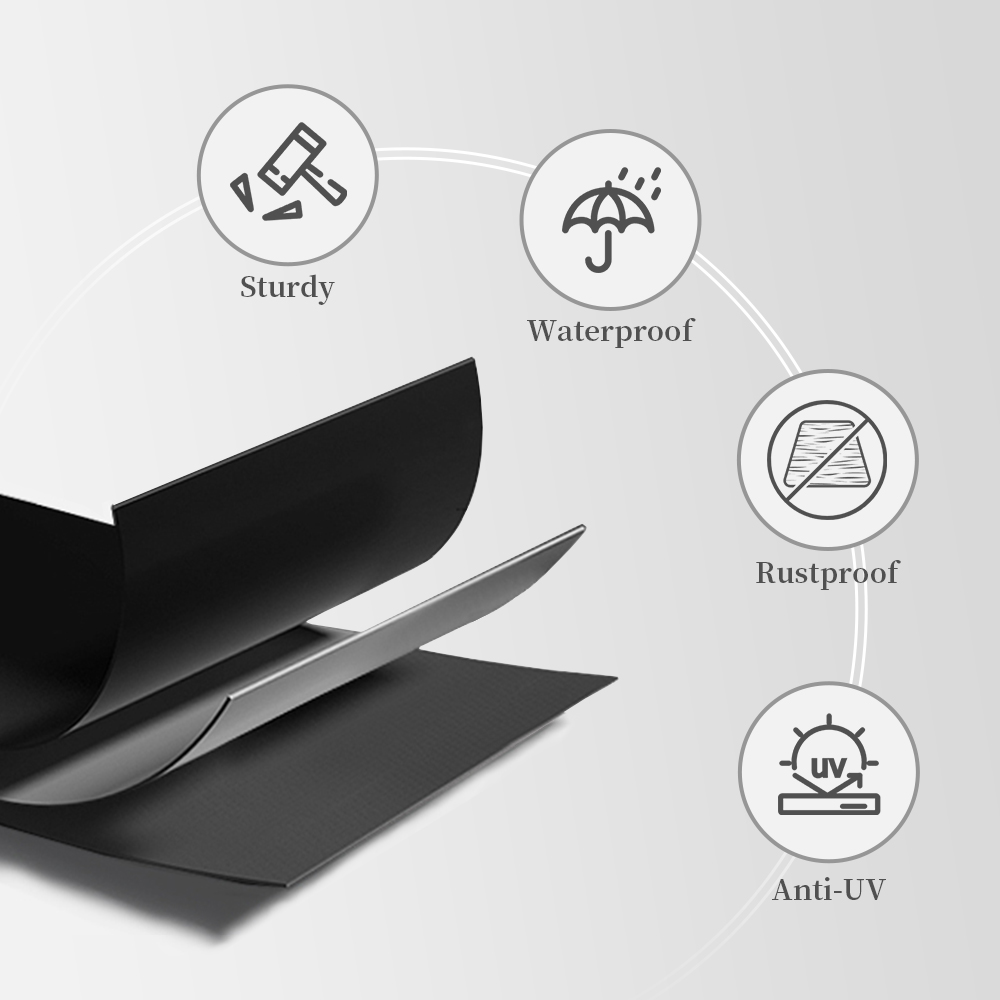
Outdoor parcel boxes face rain, snow, UV, and salt spray. The finish determines longevity.
| Process Step | What to Verify |
|---|---|
| Pre‑treatment | Degreasing, phosphating, or nano‑coating |
| Coating type | Powder coating (not liquid paint) |
| Coating thickness | 80–120 microns on flat surfaces |
| UV stability | UV‑stable pigments for outdoor use |
| Salt spray testing | ASTM B117 results (500+ hours for commercial grade) |
What to ask: “What is your standard powder coating process? Can you share ASTM B117 test reports?”
4. Weatherproofing and Sealing
Even thick steel is useless if water seeps inside. Look for:
- Gasketed doors – rubber or silicone seals around the access door
- Overlapping lip design – prevents water from being driven into the seam
- Drainage holes – allows any incidental moisture to escape
- IP rating – IP54 for covered locations, IP65 or higher for fully exposed
Red flag: No visible gasket in product images, or a vague “weather resistant” claim without an IP rating.
Part 3: Locking Mechanisms and Smart Features
The lock is the most critical security component. B2B buyers should evaluate lock options carefully.
1. Lock Types and Security Levels
| Lock Type | Security Level | Best For |
|---|---|---|
| Basic cam lock | Low | Budget residential |
| Tubular key lock | Medium | Standard residential |
| High‑security cylinder (anti‑drill, anti‑pick) | High | Commercial, multi‑tenant |
| Combination lock (mechanical or electronic) | Medium | Family access, no keys |
| Smart lock (Bluetooth, Wi‑Fi, cellular) | High (with audit trail) | Property managers, vacation rentals |
What to ask:
- “What brand or grade of lock do you use?”
- “Do you offer keyed‑alike or master key systems?”
- “For smart locks, what connectivity options and app features are included?”
2. Smart Lock Integration
If you need smart parcel boxes, evaluate:
- Connectivity: Bluetooth (proximity), Wi‑Fi (remote), or cellular (no building network required)
- Power source: Battery life (6–24 months), battery type (replaceable), optional AC power
- App features: Temporary codes, delivery notifications, access history, remote management
- Integration: API availability for property management software
Red flag: A manufacturer that cannot provide a working demo of their smart lock app.
Part 4: Production Capacity and Scalability
Your current order is only the beginning. A good manufacturer can grow with you.
1. Factory Size and Equipment
| Indicator | What to Look For |
|---|---|
| Factory area | 3,000 m² or larger for medium‑scale production |
| Key equipment | CNC punching, bending, automated welding, powder coating line |
| Daily output | Minimum 100–200 units for a standard model |
| Custom tooling | In‑house ability to create new molds or tooling for OEM designs |
What to ask: “What is your average monthly production capacity for parcel boxes? Can you scale up for a large order?”
2. Minimum Order Quantities (MOQs)
MOQs vary by customization level:
| Customization Level | Typical MOQ |
|---|---|
| Standard color, existing design | 50–100 units |
| Custom color (RAL/Pantone) | 100–200 units |
| Custom dimensions | 200–300 units |
| Full OEM (new design, tooling) | 300–500+ units |
Ensure the manufacturer’s MOQ aligns with your business model. Some suppliers offer low MOQs (10–20 units) for standard products, but those are often trading companies.
3. Lead Times and Reliability
- Sample lead time: 15–30 days
- Mass production lead time: 30–60 days (depending on order size and season)
- On‑time delivery rate: Ask for historical data (≥95% is excellent)
Red flag: A supplier who promises 20‑day lead times for a custom order – they are likely overpromising or cutting corners.
Part 5: Quality Assurance and Testing
A reliable manufacturer has documented quality control processes.
1. In‑Process Quality Control
| Stage | What Is Inspected |
|---|---|
| Raw material | Steel thickness, coating powder batch, lock function |
| Fabrication | Weld quality, hole alignment, edge finishing |
| Pre‑coating | Surface cleanliness, rust prevention |
| Final assembly | Lock operation, door fit, seal compression, packaging |
What to ask: “Do you have a written QC procedure? Can we see the inspection checklists?”
2. Third‑Party Testing and Certifications
| Certification / Test | Applicability |
|---|---|
| ISO 9001:2015 | Quality management system |
| CE marking | European market access |
| UL / ETL | North American electrical safety (smart locks) |
| RoHS | Hazardous substance compliance |
| ASTM B117 | Salt spray corrosion resistance |
| IP rating (IEC 60529) | Water and dust ingress protection |
| IK rating (IEC 62262) | Impact resistance for public areas |
What to ask: “Can you provide a copy of your latest test reports for salt spray, IP rating, and lock cycle testing?”
3. Pre‑Shipment Inspection (PSI)
A responsible manufacturer allows third‑party inspection before shipment. Standard practice includes:
- AQL sampling (Acceptable Quality Limit, e.g., Level II, 2.5/4.0)
- Checklist: dimensions, finish, welds, lock function, packaging, labeling
- Reporting: Formal inspection report with photos
Red flag: Refusal to allow pre‑shipment inspection or to use an independent agency like SGS, Bureau Veritas, or TÜV.
Part 6: Commercial Terms and After‑Sales Support
Beyond product quality, the commercial relationship must protect your interests.
1. Payment Terms
| Term | Standard Practice | Negotiable? |
|---|---|---|
| Deposit | 30% – 50% | Yes, for large or repeat orders |
| Balance | 50% – 70% before shipment | Can be against BL (Bill of Lading) or L/C |
| Payment methods | T/T, L/C, trade assurance | Secure methods preferred |
What to ask: “Do you accept payment against shipping documents? Can we use a letter of credit for large orders?”
2. Warranty and Spare Parts
| Component | Typical Warranty |
|---|---|
| Steel structure | 5 – 10 years |
| Powder coating finish | 3 – 5 years |
| Lock mechanism | 1 – 3 years |
| Smart lock electronics | 1 – 2 years |
Also ask about spare parts availability – locks, keys, hinges, seals. A manufacturer that stocks parts for at least 5 years is preferable.
3. Communication and Responsiveness
During the vetting process, evaluate:
- Response time: Within 24 hours (weekdays) is good.
- Clarity: Answers are specific, not vague or evasive.
- Willingness to share information: Samples, test reports, factory videos.
Poor communication before the order is a strong predictor of poor communication after problems arise.
Conclusion: Invest Time in Vetting, Reap Long‑Term Rewards
Finding the right parcel box manufacturer is not a quick process. It requires research, documentation requests, sample testing, and often a factory visit or video tour. However, the effort pays off in consistent quality, reliable deliveries, fewer customer complaints, and a supply chain you can trust.
By following this checklist, you transform from a reactive buyer—hoping for the best—into an informed procurement professional who mitigates risk and builds lasting partnerships.