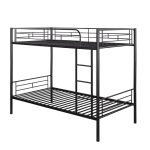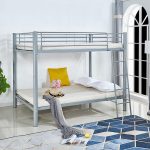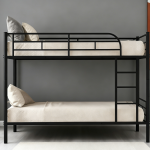

Modern bunk bed frames are a popular choice for their sleek design, durability, and space-saving benefits. Whether you’re furnishing a dorm room, guest house, or child’s bedroom, selecting a high-quality steel frame ensures safety, longevity, and style. But with countless options on the market, how do you spot a well-made bed from a subpar one? Here’s a detailed guide to help you evaluate steel bunk bed frames like a pro.
1. Material Quality
The type of steel used determines everything about a bunk bed's strength and longevity.
Key indicators:
- Gauge/thickness matters most: Look for beds using 14-16 gauge steel (lower number = thicker). Budget beds often use 18-22 gauge steel, which feels flimsy and flexes under weight.
- Steel type: Cold-rolled steel is superior to hot-rolled for furniture. It's stronger, has a smoother surface, and resists warping.
- Weight test: Lift part of the bed frame if possible. Quality steel bunk bed frames have substantial heft. Lightweight = thin materials.
- Tube vs. angle iron: Square or rectangular tubular steel (at least 1.5×1.5 inches) is stronger and more stable than L-shaped angle iron. Full-box construction (steel completely enclosed) is ideal for preventing dust accumulation and adding rigidity.
2. Construction & Welding
How the steel pieces connect determines the bed's structural integrity.
Critical quality signs:
- Welding quality: Look for continuous, smooth welds without gaps, bubbles, or splatter. Spot welds (small, intermittent connections) are weaker than continuous seam welding.
- Reinforcement at stress points: High-quality beds add gussets (triangular steel plates) or double/triple welding at critical joints: where the ladder attaches, guardrail connections, and corners of the bed frame.
- Modular vs. welded construction: Fully welded main frames are stronger than completely modular designs. However, well-engineered modular systems with sleeve-over connections and locking pins can be excellent if properly designed.
- Guardrail attachment: Guardrails should be continuously welded to vertical posts, not just bolted. The connection should feel completely solid.
3. Safety Features That Aren't Optional
For steel bunk bed frames, safety is paramount—the material doesn't flex like wood, so engineering matters even more.
Non-negotiable safety elements:
- Guardrail height & design: Top bunk guardrails must extend at least 5 inches above the mattress foundation. The guardrail should attach at multiple points (minimum 3-4 connection points per side).
- Gap prevention: All openings should be smaller than 3.5 inches to prevent entrapment. This includes spaces between guardrail bars, at the ladder, and between the mattress and frame.
- Integrated vs. bolt-on ladder: Integrated ladders (welded as part of the frame) are vastly superior to bolt-on designs. They eliminate wobble and pull-out risk.
- Ladder rung design: Rungs should be wide (minimum 3 inches), flat, and textured for slip resistance. Round, narrow rungs are uncomfortable and unsafe.
- Weight capacity verification: A quality bed will clearly state tested weight limits (typically 200-400 lbs per bunk for steel). Look for ASTM or CPSC compliance labels.
4. Finish & Protection
The finish affects appearance, durability, and even safety.
What separates premium from poor finishes:
- Powder coating vs. paint: Powder coating is electrostatically applied and baked on. It's thicker, more durable, chip-resistant, and environmentally friendly compared to liquid paint. Ask specifically if the bed is powder-coated.
- Finish thickness: Quality powder coating measures 2-4 mils thick. You can often feel the substantial, smooth coating.
- Edges and corners: These areas should have even, complete coverage without thin spots or drips. Check inside tubes if possible—quality manufacturers often finish interior surfaces too.
- Color consistency: The color should be perfectly uniform with no thin patches, especially around welds.
- Scratch resistance: A quality finish won't scratch off easily with a fingernail test.
5. Hardware & Assembly
Even the best-designed bed can fail with poor hardware.
Quality hardware indicators:
- Bolt size & material: Look for grade-5 or grade-8 bolts (marked on the head), not generic hardware store bolts. They should be substantial (at least 8mm diameter for critical connections).
- Locking mechanisms: Quality beds include lock washers, nylon-insert lock nuts, or flange bolts that resist loosening over time. Standard nuts and bolts will inevitably work loose.
- Precision fit: All connection points should align perfectly. You shouldn't need to force parts together or have gaps between connections.
- Wall anchoring system: A robust tip-restraint kit should be included, with solid steel brackets (not flimsy stamped metal) and appropriate hardware for your wall type.
6. Stability & Performance
How to assess stability (even before assembly):
- Shake test: Once assembled, apply firm pressure from different angles. A quality steel bunk bed frame should have zero wobble or sway. Any detectable movement indicates poor engineering or thin materials.
- Climb test: The ladder should feel completely solid with no flex. The entire bed shouldn't shift when climbing.
- Squeak test: Apply weight and shift around. Quality steel beds should be completely silent—no squeaks, creaks, or groans. Noise indicates poor fit or inadequate fastening.
- Weight distribution: With weight on only one side of the top bunk, there should be minimal flex (less than 0.5 inches deflection).
Red Flags: Signs of Low-Quality Steel Bunk Bed Frames
- Paint instead of powder coating (chips easily, less durable)
- Wobbly or bolt-on ladders
- Thin, flexing guardrails (should withstand significant outward pressure)
- Spot welding instead of continuous welding
- Sharp edges or burrs on cut metal
- Inadequate connection points (guardrails attached at only two points)
- No safety certification labels (ASTM F1427, CPSC, or similar)
- Vague or exaggerated weight claims ("holds up to 400 lbs" without per-bunk specification)
- Poor packaging with scratched finish upon unboxing
Pro Tip: The Mattress Foundation Test
A surprising indicator of quality is the mattress foundation system. Low-quality beds use flimsy, widely-spaced bars. Premium steel bunk beds feature:
- Close-spaced support (3-4 inch gaps maximum)
- Heavy-gauge cross supports
- Center support rail on longer beds
- Wrapped or capped ends to prevent mattress damage
Verifying Claims: Questions to Ask Manufacturers
"What gauge steel is used in the main frame tubes?"
"Is the finish powder-coated? How many mils thick?"
"Are guardrails continuously welded or bolted?"
"What safety standards does this bed meet? (ASTM/CPSC/EN)"
"What is the exact weight limit per bunk, and is this tested or calculated?"
Final checklist when inspecting:
- Substantial weight and feel
- Smooth, even powder coating
- Continuous, clean welds
- Rock-solid stability when assembled
- Clear safety certifications
- Robust hardware package
- Integrated or extremely sturdy ladder
- Detailed, clear assembly instructions
Remember: With steel bunk bed frames, you're not just buying furniture—you're buying safety engineering. Don't let sleek photos fool you. Take the time to verify quality through these tangible metrics, and you'll invest in a bed that provides security, durability, and peace of mind for years to come.