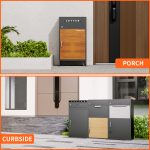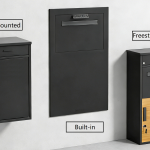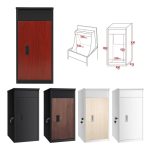

You have selected a parcel delivery box that seems perfect for your needs. The steel feels thick. The lock looks secure. The price is right. But six months after installation, you notice rust bubbling under the paint. The lock is stiff. On heavy rain days, moisture seeps inside, leaving packages damp. What went wrong?
The answer lies in protection ratings—specifically, the difference between weatherproof and waterproof. These terms are often used interchangeably in product listings, but they represent fundamentally different levels of protection. For buyers—property managers, developers, wholesalers, and facility operators—understanding this difference is essential to avoid costly failures and dissatisfied end users.
Defining the Terms – Weatherproof vs. Waterproof
1. Weatherproof
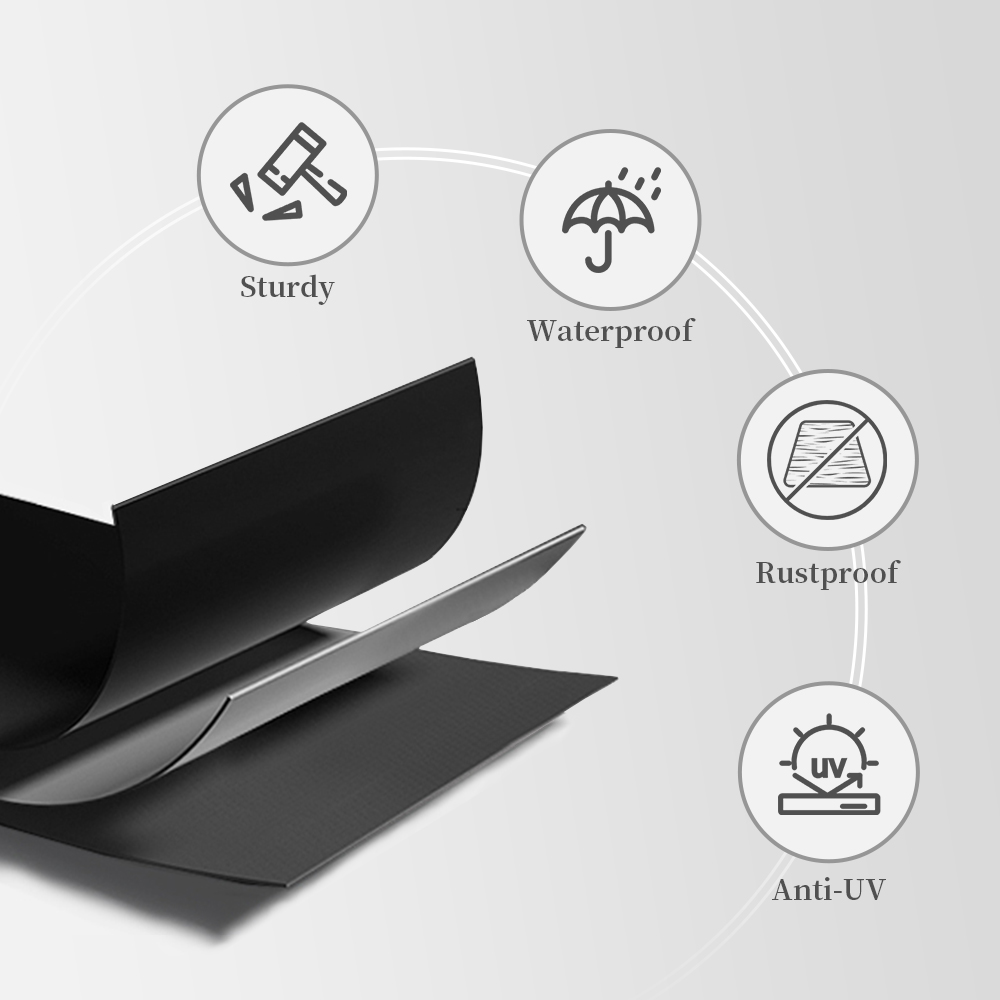
A weatherproof parcel delivery box is designed to withstand typical outdoor conditions: rain, snow, wind, dust, and sunlight. However, “weatherproof” does not mean completely sealed against water. A weatherproof box can handle splashing water, light to moderate rain, and normal humidity, but it may allow minimal moisture ingress during prolonged or extreme exposure.
Key characteristics of weatherproof boxes:
- Resists rust and corrosion under normal outdoor use
- Withstands UV exposure without rapid fading or degradation
- Tolerates temperature fluctuations
- Suitable for covered or semi-exposed locations (porches, entryways, under eaves)
2. Waterproof
A waterproof parcel delivery box provides a much higher level of protection. Waterproof products are designed to prevent water ingress entirely under defined conditions—including submersion. Unlike “weatherproof,” “waterproof” can be clearly defined using standardized ingress protection (IP) ratings.
Key characteristics of waterproof boxes:
- Complete barrier against water ingress under specified conditions
- Can withstand heavy rain, hose-directed water, or even temporary submersion (depending on rating)
- Suitable for fully exposed outdoor locations
- Required for coastal areas, regions with heavy rainfall, or locations prone to flooding
The Critical Distinction for Buyers
The difference is not merely semantic; it has real financial and operational consequences. Installing a weatherproof box in a fully exposed, high-rainfall area will lead to premature failure, customer complaints, and replacement costs. Conversely, paying for a waterproof box for a covered porch may be unnecessary expense.
The IP Rating System – The Global Standard
The Ingress Protection (IP) rating system, defined by international standard IEC 60529, is the most reliable way to evaluate a parcel box’s resistance to solids and liquids.
How IP Ratings Work
An IP rating consists of two digits:
- First digit (0–6): Protection against solid objects (dust, debris, fingers)
- Second digit (0–9K): Protection against liquids (moisture, rain, submersion)
For outdoor parcel boxes, both digits matter, but the second digit is the most critical for weather protection.
First Digit – Solid Particle Protection
| Level | Protection | What It Means |
|---|---|---|
| 4 | Protected against objects >1mm | Most wires, small tools |
| 5 | Dust-protected | Limited ingress of dust allowed |
| 6 | Dust-tight | No ingress of dust; highest for solids |
Recommendation for parcel boxes: IP5x or IP6x. IP6x (dust-tight) is preferred for commercial outdoor use.
Second Digit – Liquid Ingress Protection
| Level | Protection | What It Means for a Parcel Box |
|---|---|---|
| 3 | Spraying water | Water spray up to 60° from vertical – light rain |
| 4 | Splashing water | Water splashes from any direction – standard rain |
| 5 | Water jets | Low-pressure water jets from any direction – heavy rain |
| 6 | Powerful water jets | High-pressure jets or heavy seas – very heavy rain, hose-down |
| 7 | Temporary immersion | Immersion up to 1 meter for 30 minutes – flooding, puddles |
| 8 | Continuous immersion | Immersion beyond 1 meter – submersion protection |
Common IP Ratings for Parcel Delivery Boxes
| IP Rating | Protection Level | Suitable Installation Environment |
|---|---|---|
| IP44 | Protected against splashing water | Covered porch, under deep eave |
| IP54 | Dust-protected and splash-resistant | Standard residential, light commercial under overhang |
| IP55 | Dust-protected and low-pressure water jets | General outdoor, moderate rainfall |
| IP65 | Dust-tight and low-pressure water jets | Fully exposed residential and commercial – most recommended |
| IP66 | Dust-tight and powerful water jets | High-rainfall zones, locations with pressure washing |
| IP67 | Dust-tight and temporary immersion | Flood-prone areas, coastal applications |
What IP Ratings Do NOT Tell You
IP ratings do not account for:
- UV exposure – long-term sunlight can degrade seals and coatings
- Temperature extremes – freezing can damage gaskets or lock mechanisms
- Corrosion resistance – salt spray requires additional material specifications (e.g., stainless steel)
- Impact resistance – physical blows are measured by IK ratings, not IP
NEMA Ratings – The North American Standard
For B2B buyers in North America, NEMA (National Electrical Manufacturers Association) ratings provide an additional, often more rigorous standard. While originally developed for electrical enclosures, NEMA ratings are increasingly applied to commercial parcel boxes, especially those housing electronic smart locks.
Common NEMA Ratings for Outdoor Parcel Boxes
| NEMA Type | Protection Level | Equivalent IP (approx.) | Best For |
|---|---|---|---|
| 3R | Protects against falling rain, sleet, snow; undamaged by external ice | IP14 | Basic outdoor, not dust-tight |
| 4 | Watertight and dust-tight; resists hose-directed water, rain, sleet, snow | IP66 | Standard commercial outdoor |
| 4X | Watertight, dust-tight, and corrosion-resistant; requires stainless steel | IP66 + corrosion | Coastal environments, industrial |
NEMA 4X is the premium choice for harsh environments. It includes rigorous salt spray testing (typically 200 hours) and requires materials that resist corrosion even when the finish is scratched.
NEMA vs. IP: Which Should You Specify?
- For general commercial outdoor use in North America: NEMA 4 or IP66 are equivalent and sufficient.
- For coastal or chemical environments: NEMA 4X is strongly recommended.
- For international sourcing: IP ratings are more universally understood and documented.
FAQs:
Q: What IP rating do I need for a parcel box in a standard suburban yard?
A: IP65 is recommended for fully exposed locations. It is dust-tight and resists low-pressure water jets from any direction, handling heavy rain easily.
Q: Is a higher IP rating always better?
A: Generally, yes, but higher ratings (IP67, IP68) add cost. For most applications, IP65 is the sweet spot. Only choose IP67+ if flooding or submersion is a real risk.
Q: What is the difference between NEMA 4 and NEMA 4X?
A: NEMA 4 is watertight and dust-tight. NEMA 4X adds corrosion resistance, validated by salt spray testing. Use NEMA 4X for coastal or industrial environments.
Q: Can a weatherproof box be used outdoors without an eave?
A: It depends on the specific rating. A box with IP44 or IP54 may be “weatherproof” but is not designed for direct, prolonged rain exposure. Always check the IP rating – look for IP65 or higher for fully exposed locations.